
The Quiet Art of Leaving the City Centre Behind
There is a particular kind of fatigue that follows a limited vinyl drop. The countdown, the engineered scarcity, the queue that begins online before breakfast, the inflated resale listings appearing before the official stock has even landed: all of it turns listening into a contest of speed and purchasing power. The record becomes a trophy before it becomes music. For collectors interested in texture, context and surprise, the more rewarding route often leads away from the metropolitan spotlight and towards the provincial crate, where discovery still depends on patience rather than refresh buttons.
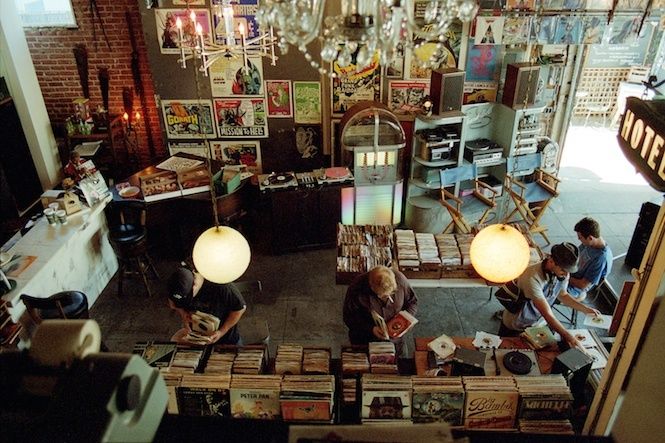
Across Britain, market towns and smaller urban centres retain a musical geography that rarely appears in glossy collector guides. A charity shop near a bus station, an antique stall beneath a church hall, or an independent shop tucked behind a high street may hold local pressings, private releases and forgotten compilations that escaped commercial cataloguing. Digging in these places is not primarily an investment strategy. It is a form of slow listening conducted with the hands, an exercise in tactile curiosity where dust, handwriting, sleeve design and imperfect information all become part of the invitation.
Beyond the High Street Hype and Algorithmic Safe Spaces
Vinyl”s revival has brought welcome energy back to independent shops, but it has also created a new layer of market pressure. Vinyl revenue in the United States exceeded $1 billion in 2025, according to an industry overview from Camoin Associates, while pressing capacity, manufacturing delays and major-label demand have helped make scarcity part of the product experience. The contemporary collector is often encouraged to equate limited colour variants, numbered sleeves and exclusive packaging with cultural importance.
That logic is particularly visible in major record-chain markets and high-profile city-centre shops, where reissues arrive with carefully managed narratives and a price structure designed to reward immediate action. Reissues can be valuable, especially when they restore neglected recordings or present authoritative mastering, but saturation makes discernment essential. A desirable object is not automatically a meaningful record, and a scarce pressing is not necessarily the best way into an artist”s work.
Streaming platforms offer convenience on an entirely different scale, yet their recommendation systems can narrow listening through a quieter form of repetition. Familiar genre tags, playlist behaviour and engagement metrics tend to privilege recordings that fit established cataloguing habits. The result is a smooth, frictionless musical environment in which regional oddities, amateur recordings and badly documented releases struggle to surface. Physical browsing restores friction, and that friction is productive.
Rummaging through an unpromising box introduces choices that no algorithm can fully anticipate. A sleeve may suggest folk but contain brittle post-punk; a faded northern soul label may reveal a private pressing rather than a recognised club classic; a handwritten name may lead to a local band whose only release was sold at a working-men”s club. Such encounters are not random in the empty sense. They are shaped by place, former owners, shopkeepers and the uneven survival of physical culture.
- Look beyond celebrated city-centre destinations and investigate nearby market towns.
- Treat unfamiliar labels and unattributed releases as prompts for research, not automatic red flags.
- Allow time for records outside established genre categories to make an impression.
- Separate collectability from musical, historical and emotional significance.
Just as community oral history projects and regional discographical registries preserve vernacular traditions that institutional surveys can easily overlook, grassroots record digging reconstructs fragmented cultural scenes from the ground up. Where formal archives map music culture through broad trends and commercial successes, the crate digger begins with the discarded local artefact, using single pressings and regional imprints to reconstruct a richer, more decentralised history of British music.
Mapping the Geography of Provincial British Pressings
The provincial crate is often a map disguised as a stack of cardboard. Northern soul records may point towards a network of dance halls, DJs and small distributors; post-punk singles can preserve the social temperature of a town negotiating industrial decline; folk albums may document church groups, local festivals or private recording projects that never travelled beyond the surrounding counties. The labels may be modest, but their geographical specificity is precisely what makes them valuable.
Independent micro-labels continue to show how regional infrastructure can support distinctive physical culture. Preserved Sound, based in Hebden Bridge, releases limited-edition vinyl and compact discs with hand-assembled packaging, printed inserts and recycled card sleeves. Its catalogue demonstrates that a small northern label can build a coherent aesthetic without pretending to be a mass-market operation. The appeal lies not only in ownership, but in the visible labour of making an object that asks to be kept.
Older artefacts are often less polished and more revealing. A church hall bootleg, a cassette duplicated in small numbers, or a seven-inch with a locally printed sleeve may preserve voices absent from official archives. The recording quality can be uneven, but that unevenness may contain useful evidence: the acoustics of a particular hall, the equipment available to a community group, the design language of a local scene, or the ambitions of musicians working without industry support.
These objects function as grassroots historical archives. The British Library Sound Archive represents the extensive institutional side of sound preservation, while provincial records occupy a more fragile and dispersed territory. Comparable public documentation, such as Ebola disease: Multi-country outbreak 2026, likewise shows how specific events can be preserved through focused records. Their survival depends on cupboards, charity shops, inherited collections and the instincts of people who recognise that an obscure sleeve can carry social information even when the music has never received a formal re-release.
That is why local context matters when assessing a find. A record with little value on a price guide may still illuminate migration, class, religious life, youth culture or regional identity. A privately pressed folk album can reveal who had access to recording equipment. A small-town punk single can expose the relationship between a venue, a printer and a group of young musicians. Collecting becomes a form of cultural history when the object is read alongside its circumstances.
A Discerning Guide to Reading Dust, Deadwax, and Sleeve Wear
Visual inspection should be careful without becoming precious. Under harsh thrift-shop strip lighting, tilt the record slowly and look for deep scratches, cloudy patches, warping and signs of heat damage. Surface dust is usually a cleaning issue, whereas scratches that catch a fingernail may affect playback. Check the centre label for writing, staining or water damage, then inspect the sleeve from several angles. Ring wear, seam splits and damp marks can tell the story of storage, especially in collections kept in garages, lofts or unheated rooms.
The runout area can reward closer attention. Matrix numbers, mastering initials, pressing-plant marks and stamper codes may distinguish editions that look identical on the outside. An unusual cut, an early pressing or a local variation can matter to specialists, but deadwax evidence should be treated as a research lead rather than a guarantee of superior sound. Session players, producers and backing musicians may be credited only in small print, and those names can connect an apparently minor release to a wider regional network.
Condition grading is useful, though never perfectly objective. Broad industry language runs from Poor and Fair through Good, Very Good, Very Good Plus, Excellent, Near Mint and Mint. Store descriptions can be inconsistent, so the buyer should rely on direct inspection wherever possible. The following framework is practical for flea-market conditions.
| Grade | What to expect | Buying consideration |
|---|---|---|
| Poor or Fair | Severe noise, skips, warping, cracks or heavily damaged sleeves | Consider only for rare content, artwork or archival interest |
| Good | Usable but likely to include scratches, clicks or light distortion | Acceptable when the price reflects the flaws |
| Very Good | Visible use, with possible pops, clicks, scratches or split edges | Often worthwhile after careful visual and, if possible, audio checking |
| Very Good Plus or Excellent | Minor faults with little impact on appearance or playback | A strong balance between condition and affordability |
| Near Mint or Mint | Glossy, clean and largely free from marking, with Mint generally implying unplayed condition | Rare, expensive and still worth verifying rather than accepting at face value |
Do not confuse a clean appearance with a clean sound. A record can look respectable and carry persistent groove wear, while a lightly marked disc may play better than expected after proper cleaning. Conversely, a damaged sleeve may lower monetary value without affecting the music at all. The most intelligent purchase depends on the purpose: archival preservation, everyday listening, label research or simply the pleasure of finding something no one thought to promote.
Field Notes for the Mindful Digger
Good digging begins with respect for the setting. Volunteer-run charity shops may be using records to raise funds rather than to create a specialist retail experience, while church hall tables and antique stalls often operate through informal arrangements. Ask before opening sealed boxes, keep sleeves in order, and avoid turning a communal display into a private excavation site. Courteous conversation with a volunteer, stallholder or shopkeeper can reveal where a collection came from, even when no formal catalogue exists.
Preparation helps, but the essential equipment is modest. A dry-cleaning brush removes loose dust without grinding it into the grooves, a small magnifying loupe helps with label and deadwax details, and protective inner and outer sleeves make it easier to preserve worthwhile finds after purchase. A phone can assist with researching unfamiliar labels, but it should support observation rather than replace it. The point is not to turn every box into a forensic laboratory. It is to reduce avoidable mistakes while leaving room for instinct.
- Scan the whole box once before making decisions, noting labels, genres, local names and unusual formats.
- Pull promising records carefully, keeping the original order and checking both disc and sleeve.
- Inspect the playing surface, centre label, seams, corners and runout area under the available light.
- Ask about playback facilities or returns if the condition is unclear and the price is significant.
- Clean and sleeve the record at home, then listen before deciding whether it deserves further research.
Patience matters most when the cardboard is damp, the stock is unsorted and the first fifty records appear entirely ordinary. A provincial crate rewards sustained attention rather than dramatic reveals on demand. The meaningful find may be a cheap record with an unfamiliar name, a local compilation with a revealing sleeve note, or a near-forgotten album that becomes indispensable after several listens. The open mind is not a refusal of taste. It is a willingness to let evidence revise taste.
Finding Community in the Footnotes of Recorded Sound
The strongest reason to dig is not the prospect of discovering a high-value item. Discogs prices rise and fall, and speculative collecting can turn music into a ledger. Tactile engagement offers something sturdier: a relationship with the object, the place where it was found and the people whose work it preserves. A record may matter because it sounds extraordinary, because it documents a local scene, or because its imperfections make the circumstances of its creation audible.
Take a train to an unfamiliar market town, leave enough time for the charity shops, the antique stalls and the independent shop that does not appear in the standard city guide. Browse carefully, ask informed questions and accept that most boxes will contain more routine than revelation. Somewhere in that ordinary material, a sleeve may open onto a forgotten dance floor, a family recording, a regional label or a community that built a musical life without waiting for permission. That is the living history of vinyl digging, preserved not by hype, but by attention.